Death by PowerPoint Is Not Education
If you have ever heard “We have CE today” and felt your soul leave your body, welcome. You are among friends!
You know the vibe.
Press play. Walk away. Come back for the quiz. Click C. Retake the quiz if needed. Get the certificate. Forget everything by dinner.
That is not education. That is paperwork with extra steps.
If CE feels like a cuss word, you are not alone
In a previous podcast, we talk about something every instructor in the fire service has seen. You can have a room full of smart, capable people, and the moment the PowerPoint starts, half the group mentally transfers stations.
It is not because prehospital providers are lazy. It is because the status quo is boring and often disconnected from real practice.
Also, we are tired. We are running calls. We are getting mandated. We are trying to be good at our jobs and have a life. If CE is going to ask for our time, it has to earn it.
The real issue is not the information, it is the delivery
One of the most important points in the podcast is this: Information is not the same thing as education.
You can have accurate content and still do a terrible job teaching it. Eric puts it in educator language: education is taking information and delivering it effectively to change behavior. That is the goal.
In EMS, behavior change is not some soft concept. Behavior is how you assess. How you decide. How you communicate. How you treat. How you document. How you avoid errors when it is loud and chaotic and your patient is crashing.
If the content does not make you better on the street, it is not doing its job.
EMS is the job now
Here is the reality that makes this whole conversation more than just a rant about boring classes.
Fire departments run medical calls. A lot of them.
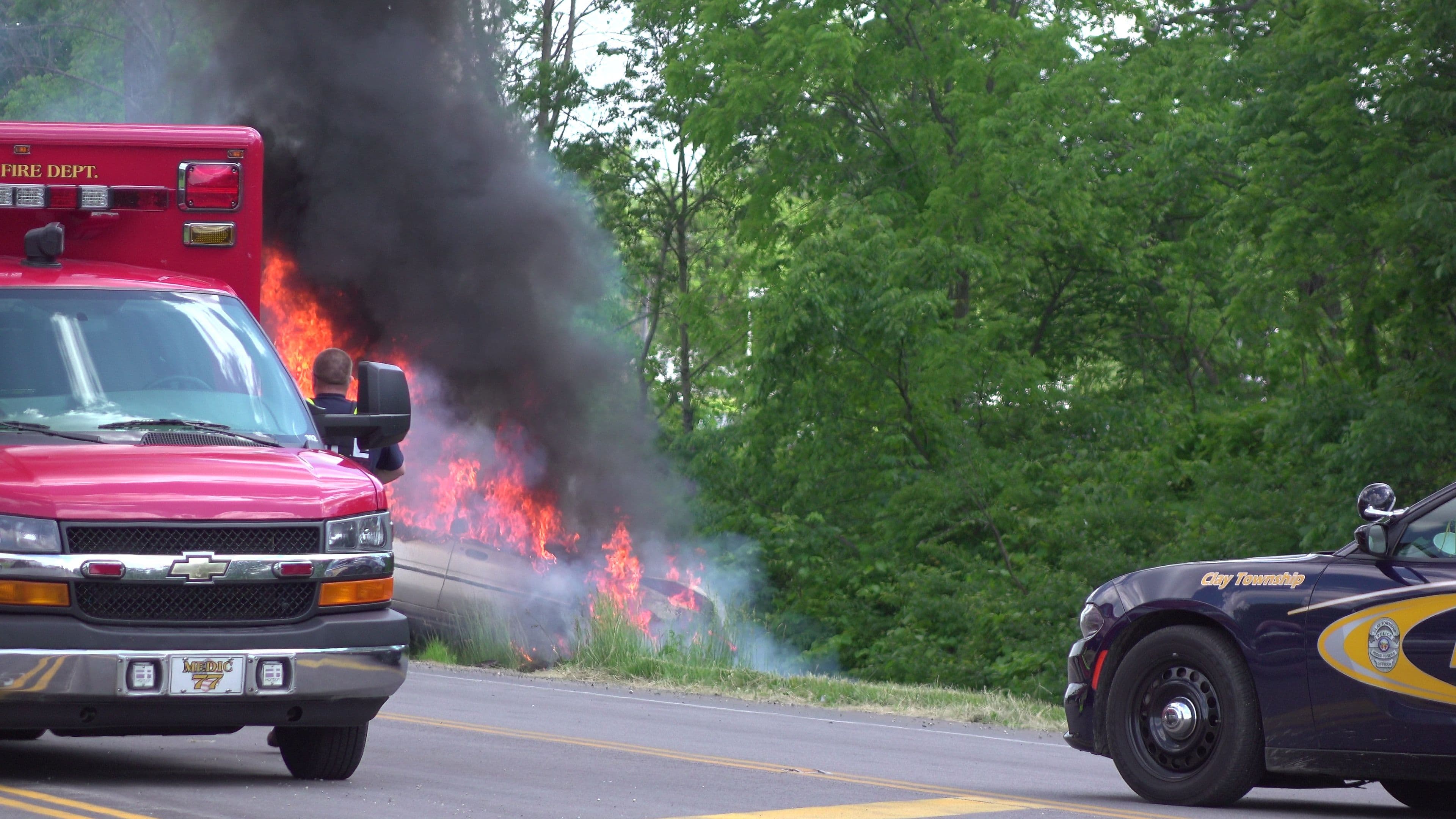
The U.S. Fire Administration’s NFIRS based breakdown shows EMS and rescue as the largest share of fire department responses, with fires making up a small percentage. In 2023, EMS and rescue was listed at 65.2% of responses, while fires were 3.9%. (U.S. Fire Administration)
That matches what most of you see on shift. You might love the big job. You might have joined for fire. But most days, the work is medical. And it is getting more complicated, not less.
So even if you are the firefighter who would rather be doing literally anything besides a nursing home call, EMS education is still part of your job. It is part of your safety. It is part of your patient outcomes. It is part of your department’s reputation.
What providers say they want
In the episode, they describe a social media poll asking what people want from an EMS education platform. Options included interactive content, ease of use, affordability, and up to date materials.
The winner was not price. The winner was engagement. Because the industry is full of “technically correct” CE that nobody is actually absorbing.
And the part I love is that they do not treat engagement like a gimmick. They treat it like a tool to make learning stick.
Why engagement is not fluff
Engaging education is not about making everything silly. It is about designing learning the way human brains actually learn.
Active learning approaches are widely supported in medical education because they require participation, improve understanding, and build skills that passive lectures do not build. (jvsmedicscorner.com)
Multimedia learning research also supports the idea that combining words and visuals, using segmentation, and controlling cognitive load can improve learning when designed well. (JSU)
And modern studies continue to show that multimedia presentations and well designed video learning can improve outcomes compared to more passive approaches. (PMC)
Translation for EMS: If you want better decision making under pressure, you cannot rely on monotone slides that people half watch while doing dishes.
You need learning that creates recall. Learning that builds pattern recognition. Learning that makes the right action feel familiar when the call is unfamiliar.
What good virtual CE looks like in the real world
Virtual education is not the enemy. Bad virtual education is.
The podcast nails the difference. A lot of virtual CE is a script read by someone who is not a provider, with slides that look like they were made in 2009 and never emotionally recovered.
That kind of CE is not only boring. It is wasteful.
What works better, especially for the fire-based adult learner, is education that matches how many of us actually learn. Visual learning. Kinesthetic learning. Scenario learning. Stories from the street. Whiteboard explanations. Practical red flags. “Here is what this looks like at 2 a.m. when the patient is sweaty and you have four minutes to decide.”
That is why Axene leans into things like drawing concepts out, building content around real environments, and making the delivery memorable. The point is not to entertain for entertainment’s sake. The point is to make the education stick.
Because when you are on scene, you do not get a pause button.
The chief level view: education lowers liability
There is a section in the podcast that every decision maker should add on their budget spreadsheet.
If you want to lower department liability, build better informed providers.
That is not marketing fluff. It is risk management.
Better education supports better assessments, better protocol compliance, better documentation, and better team performance. Even when outcomes are not perfect, a department is in a stronger position when it can show that clinicians were trained well, acted reasonably, and documented appropriately.
And this is not just about avoiding lawsuits. It is about not putting your people in positions where they feel lost on calls they run every day.
A simple checklist for choosing an EMS CE platform
If you are choosing CE for yourself, or for a whole department, here is a quick filter that works.
For individual providers
- Does it keep your attention, or do you multitask every time
- Does it use cases, visuals, and practical decision points
- Does it teach you what to do, not just what to know
- Does it fit your schedule and mobile viewing
- Does it leave you with takeaways you can use on the next shift
For departments
- Do providers actually complete it, and retain it
- Is it built for your reality, including fire based EMS
- Can you track completions cleanly and reduce admin headache
- Is the content updated and evidence based
- Does it create measurable improvements in confidence and performance
If your current CE feels like dead weight, it is okay to call it what it is. Then replace it with something that actually helps.
Closing: use all eight cylinders
They end the episode with an analogy that fits the firehouse perfectly.
If your program has eight cylinders, why run it on five.
You already have live training. You already have an FTO program. You already have medical minutes. Continuing education is another piece of the engine. If that piece is poorly designed, you are leaving performance on the table.
And in EMS, performance is not about ego. It is about patient outcomes, provider confidence, and doing the right thing fast.
Learning should be fun. Learning should be useful. Learning should make you better.
Anything less is just a certificate factory.
External sources cited
- USFA NFIRS based U.S. fire department responses (2023) showing EMS and rescue as the leading incident type and fires as a smaller share. (U.S. Fire Administration)
- Evidence and overview supporting active learning in medical education. (jvsmedicscorner.com)
- Mayer’s multimedia learning research foundational overview and design principles for learning with words and pictures. (JSU)
- Evidence that multimedia presentations and video based learning can improve learning outcomes. (PMC)